

Direct A-to-B Transfers
Point to Point Limo Service
A direct ride from A to B — one fixed price, no hidden fees, and no hourly meter. Luxury black cars and professional chauffeurs take you straight to your destination, 24/7, with last-minute bookings always welcome.
Start Your Reservation
Tell us about your trip and continue to service options.
Time is local to your pickup location
Pickup time must be in the future.
- Available 24/7
- Flat Rate · No Hidden Fees
- Direct A-to-B Transfer
- Licensed & Insured
One Ride, One Price, Straight There
Sometimes you don’t need a car for the day — you just need to get from one place to another, comfortably and on time. Our point-to-point limo service does exactly that: a direct transfer at one budget-friendly flat rate, with no hidden fees or unpredictable charges. Once you ride with Chicago Limos Inn, you’ll see the value for what you pay — a luxury black car, a professional chauffeur, and a ride that makes getting around easier, more enjoyable, and more practical.
The Right Vehicle for Your Transfer
Choose the right vehicle for direct airport, business, and group transfers — luxury black cars, executive sedans, and limos throughout Chicago.
 Business Classfrom$83
Luxury Sedan
A discreet, comfortable black car for solo travelers and couples making a direct trip across the city.
Book Now Business Classfrom$91
Luxury SUV
Extra room for luggage or a small group — a popular pick for fixed-price airport and downtown transfers.
Book Now VIP Classfrom$135
Premier VIP Sedan
Polished, quiet executive transport for direct business transfers between offices, meetings, and the airport.
Book Now Group Travelfrom$315
14 Passenger Executive Sprinter
Keep a group together for a single transfer to a wedding, venue, or event, with comfortable lounge seating.
Get a Quote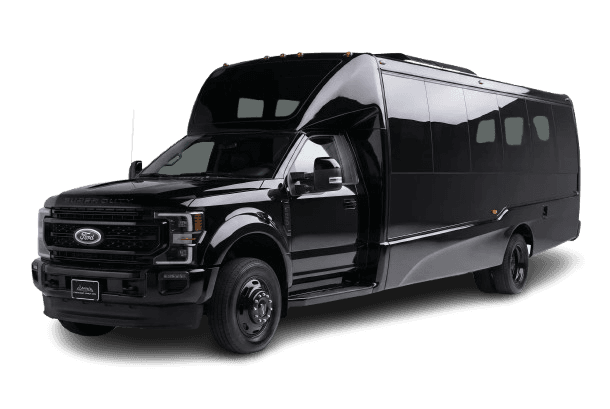 Group Travelfrom$625
Mini Bus
Fixed-price group transfers to conventions, games, and corporate events across Chicago and the suburbs.
Get a Quote Group Travelfrom$895
Motor Coach
Large-group point-to-point transportation to a single destination, with generous seating and luggage room.
Get a Quote Complete Fleet
Explore Our Complete Fleet
Explore our complete fleet of luxury sedans, SUVs, Sprinter vans, mini buses, stretch vehicles, and motor coaches with detailed seating and luggage capacities.
View Complete Fleet* “From” prices are starting fares and can vary with mileage, stops, and selected features. Gratuity and tolls are not included; your final price is confirmed at the time of the booking.
Why Travelers Choose Point-to-Point
- ✓Fixed pricing before pickup
- ✓No surge pricing
- ✓No meter
- ✓Professional chauffeur
- ✓Direct transportation
How It Works
How Point-to-Point Service Works
The simplest service we offer — one transfer, one price, straight to your destination.
One Fixed Price
A single flat fare for the whole transfer, quoted upfront — budget-friendly, with no hidden fees or unpredictable charges.
Straight to Your Destination
A direct A-to-B ride along the most efficient route — no detours, no shared rides, and no hourly minimum to meet.
No Meter, No Waiting
You’re not paying for time in traffic or a block of hours you won’t use — just the ride from where you are to where you’re going.
Last-Minute Welcome
Open 24 hours a day for last-minute Chicago limo bookings — reserve in seconds and we’ll have a chauffeur on the way.
Anywhere in Chicagoland
Where Point-to-Point Takes You
- Airport Rides
- Business Trips
- Hotel Transfers
- Weddings
- Corporate Events
- Anniversaries
- Sporting Events
- Nights Out
- Funerals
- Family Trips
Airport Transfers
Direct one-way rides to and from O’Hare and Midway at a fixed price — no round-trip commitment, no hourly minimum.
Hotels & Downtown
Straight transfers to downtown hotels, conventions, and the Loop — arrive relaxed and right on time.
Restaurants & Nightlife
A clean, comfortable ride to dinner, a show, or a night out — drop-off at the door, no parking to find.
Business & Events
On-time A-to-B transfers to meetings, corporate events, weddings, and venues across Chicagoland.
Where We Drive
Point-to-Point Service Across Chicagoland
Direct point-to-point transfers across downtown Chicago, both airports, and the surrounding suburbs — wherever you need to be. Part of our full Chicago limo and car service.
- Downtown Chicago
- The Loop
- O’Hare Airport
- Midway Airport
- Schaumburg
- Hoffman Estates
- Naperville
- Oak Brook
- Rosemont
- Evanston
- The Suburbs
Point-to-Point Limo Service in Chicago

Our point-to-point limo service is built around style, comfort, and one simple promise: the price you’re quoted is the price you pay. There are no hidden fees and no unpredictable charges — just a direct transfer from your pickup to your destination at a budget-friendly flat rate.
Chicago Limos Inn is a leading limo service provider, and we welcome you to a range of luxurious black cars and stretch limos — some of the finest vehicles on the market. Whatever the occasion, a point-to-point ride makes your transportation easier, more enjoyable, and more practical, with a professional chauffeur handling the route while you sit back and relax.
Many of our most popular transfers are airport transfers — a direct, fixed-price ride to or from O’Hare and Midway without the round-trip commitment or hourly minimum. But point-to-point works just as well for hotels, restaurants, business meetings, weddings, and nights out anywhere across Chicagoland.
We’re open 24 hours a day, we go everywhere, and we welcome last-minute Chicago limo bookings. Reserve online in under a minute for an instant quote, or call our team — either way, your luxury ride will be ready to take you straight where you need to go.
Why Book Point-to-Point with Chicago Limos Inn
When you just need to get from one place to another, the last thing you want is a surprise fare or a driver who never shows. For more than 20 years, Chicago travelers have trusted us for direct, fixed-price transfers that simply work — a professional chauffeur, a spotless vehicle, and a price you agree to before you ride.
No meter, no hourly minimum, no hidden fees, and no rideshare surge — just the most practical way to get across the city, available any hour of any day.
What Every Point-to-Point Ride Includes
- ✓One flat, upfront price. A single fixed fare for the transfer — no hidden fees, no surge, and no surprises when you arrive.
- ✓Direct, efficient routes. Straight from A to B with no detours or shared rides — the simplest way across the city.
- ✓Luxury black cars & limos. Immaculate sedans, SUVs, and stretch limos — some of the finest vehicles on the market.
- ✓Professional chauffeurs. Background-checked, courteous, and on time — they know Chicago’s roads and the fastest way through them.
- ✓24/7 & last-minute welcome. Open every hour of every day, with last-minute Chicago limo bookings always welcome.
- ✓Licensed, insured, and safe. Fully licensed and insured operations with transparent pricing — peace of mind on every ride.
FAQ
Point-to-Point Service Questions
What does point-to-point limo service mean?
Point-to-point is a direct ride from one location to another — pickup at point A, drop-off at point B — for a single, fixed price. There’s no hourly meter and no waiting time built in; you book the transfer you need, your chauffeur takes the most efficient route, and that’s it. It’s the simplest, most budget-friendly way to get from where you are to where you’re going.
Is point-to-point cheaper than booking a limo by the hour?
For a single, direct trip, yes. Point-to-point is priced as one flat fare for the A-to-B transfer, so you’re not paying for a block of hours you don’t use. If your plans involve multiple stops or you want the car and chauffeur to stay with you, our hourly service is the better fit — but for a straight shot to one destination, point-to-point is the most economical choice.
Is the price really flat, with no hidden fees?
Yes. Your point-to-point fare is quoted upfront and includes the ride — no surge pricing, no per-minute charges, and no surprise fees when you arrive. What you’re quoted is what you pay, which is exactly why so many travelers switch to us from unpredictable rideshare pricing.
Can I book a one-way airport transfer as point-to-point?
Absolutely. A one-way ride to or from O’Hare or Midway is one of the most popular point-to-point trips we run. You get a fixed price, a professional chauffeur, and a clean luxury vehicle — without the round-trip commitment or hourly minimum.
Do you accept last-minute point-to-point bookings?
We do. Chicago Limos Inn is open 24 hours a day and we welcome last-minute Chicago limo bookings. Reserve online in under a minute or call 1-312-265-6322, and we’ll have a chauffeur and vehicle ready to take you straight to your destination.
What vehicles are available for point-to-point rides?
Our full fleet is available for point-to-point service — luxury black-car sedans and SUVs for individuals and couples, executive sedans for business travel, and stretch limos, Sprinters, and coaches for groups. You choose the vehicle that fits your trip, and the flat rate is based on that choice.
Explore Related Services
Beyond point-to-point transfers, Chicago Limos Inn provides chauffeured transportation across Chicago and the Midwest.
Direct · Flat Rate · 24/7
One Ride. One Price. Straight There.
Reserve a point-to-point ride in seconds — a fixed price, a luxury vehicle, and a chauffeur who takes you straight to your destination.
Flat rate · No hidden fees · Licensed & insured
Before you book
Everything you need to ride with confidence
Still deciding? Here’s how booking works, what it costs, and what other riders say.